
Business Challenge
Mobile products fail quietly when the workflow feels heavy, unclear, or too dense for small screens. A feature list alone does not make the product usable.
Service
We build mobile products around repeatable user behavior: fast entry flows, readable screens, and a product loop that stays useful after the first install. The goal is to ship an app people can actually return to, not just a demo.
Business Challenge
Mobile products fail quietly when the workflow feels heavy, unclear, or too dense for small screens. A feature list alone does not make the product usable.
Delivery Approach
We start with the smallest repeated habit the app needs to support, then design the interface around that loop. Once the core interaction feels easy, we layer in reporting, settings, and growth-facing proof like store assets and screenshots.
Best Fit
What Gets Delivered
Delivery Process
Define the smallest habit or job the app needs to support repeatedly.
Design the primary flows for speed, clarity, and low-friction use.
Build the MVP around the repeatable core before expanding edge cases.
Use live screenshots and release assets to turn the product into visible proof after launch.
Tooling and Delivery Layer
Related Work
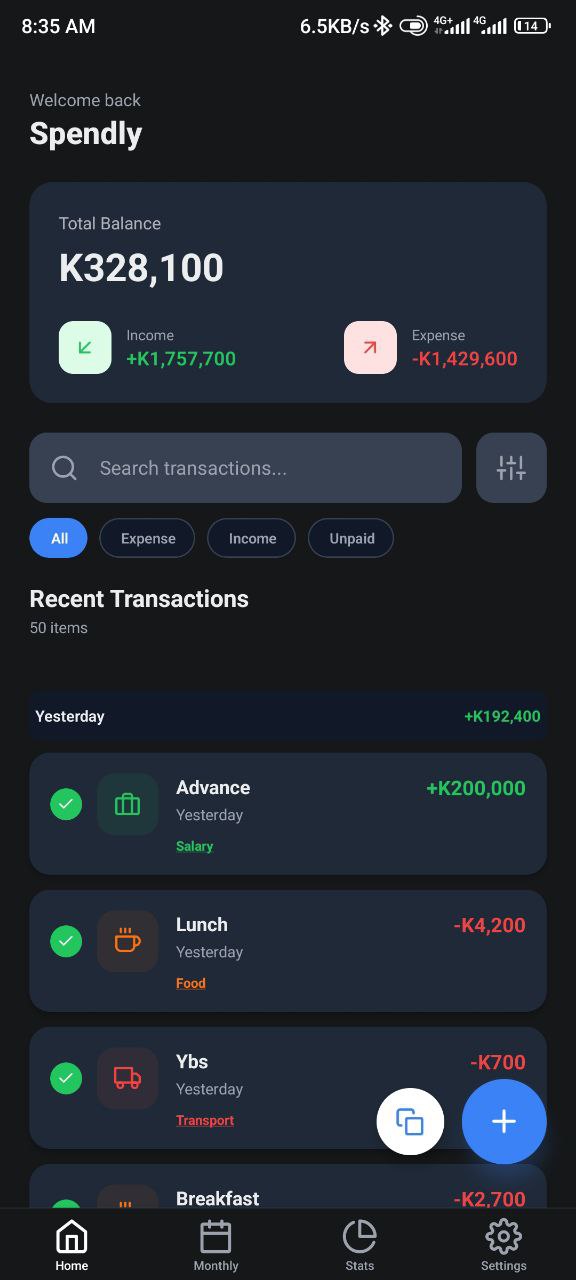
Published Product
Spendly is a published Android expense tracker built to make daily transaction logging fast, monthly review readable, and product proof tangible for future client work.
Client
Internal product
Timeline
Published MVP with ongoing iteration
Service FAQ
These answers are designed to make fit, scope, and the first release path easier to understand before the project conversation starts.
Yes. Android-first delivery is a practical path when the goal is to launch quickly, validate the core workflow, and create visible proof through a real release.
Next Step
The fastest path is a short conversation about the goal, the repeated workflow, and what the first usable release needs to support.